
History
Biting Tongues
Biting Tongues emerged from Manchester's experimental music scene, initially forming to provide a sonic backdrop for a 16mm silent film of the same name. The band's genesis involved Ken Hollings, Howard Walmsley, Eddie Sherwood, and others, responding to an open invitation for creative exploration at Tony Wilson's Factory Club. Following their initial performance, Colin Seddon and Graham Massey joined, solidifying the group's core members.
Early Experiments and First Releases
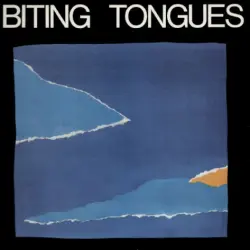
The band's creative process embraced a wide range of source materials, including overheard conversations, news reports, film dialogue, and writings from various subcultures. This openness allowed Biting Tongues to freely experiment with new ideas and approaches. Their debut album, Don't Heal, was recorded in two distinct sessions. The 'Dark Room Skin Transfers' portion, captured in August 1980 at Drone Studios, featured a deliberately dry sound due to the studio's denim-clad, "dead room" acoustics, with minimal overdubs. The 'The White Valise' side, recorded in January 1981 at the more refined Pennine studios, incorporated ambient sounds, such as the coffee machine in the hall, which can be heard on the track "Heart Disease." Despite being the first release on the Situation 2 label, Don't Heal achieved modest sales.
Expanding Horizons: Film and Soundtracks
Biting Tongues' activities diversified significantly. By 1983, the group was involved in the funding and creation of Feverhouse, a feature film project spearheaded by Howard Walmsley and Ken Hollings. Ken penned the script, and Graham Massey made an on-screen appearance. Tony Wilson provided additional funding, and Factory Records later released the finished film through their Ikon video arm. The soundtrack for Feverhouse marked a departure from conventional instrumentation, focusing on loop-driven, ambient textures and percussion-heavy arrangements, influenced by the emerging sounds of bands like ACR, Gristle, and 23 Skidoo. This soundtrack was later released on vinyl as Fact 105. During this period, Biting Tongues continued their experimental approach, often utilizing two drum kits, with Colin Seddon contributing on bass and then joining the second kit.
Lineup Changes and Factory Records Era
In 1984, Ken Hollings and Eddie Sherwood departed. Phil Kirby joined on drums, bringing a high-octane, jazz-influenced style that intensified the band's sound. Collaborating with sound engineer John Hurst, who became an unofficial fifth member, Biting Tongues further explored sonic manipulation with equipment like the powertran digital delay/looper and harmonizer. Trombonist Tom Barnish joined, adding depth to the arrangements, and various vocalists, including Basil Clarke from Yargo, contributed. Despite a wealth of new material, little was recorded during this phase before Colin Seddon left to focus on African and Brazilian percussion, forming the Inner Sense Percussion Ensemble with Eddie Sherwood.
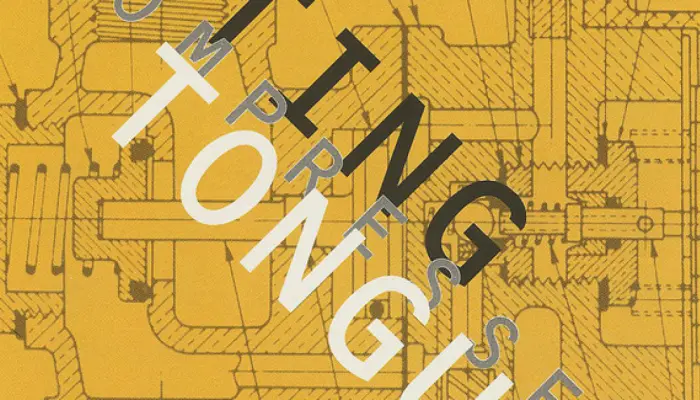
Factory Records revisited Feverhouse in 1985, leading to new recordings by Biting Tongues. Mark Derbey took over bass duties, and the band recorded the Trouble Hand EP at Square One studios and Out of the Blue studios. Factory invested heavily in the EP, including its artwork, and despite moderate sales, they remained committed to the band. In 1986, Patrick Steer replaced Mark Derbey on bass, and the band recorded the Compressor EP for Factory. Although a full album was not released during this productive period, the Ikon video Wall of Surf was issued. The band faced a setback in 1987 when rhythm section members Phil Kirby and Paddy Steer left to focus on Yargo, which had signed a lucrative deal.
Electronic Evolution and Unreleased Projects
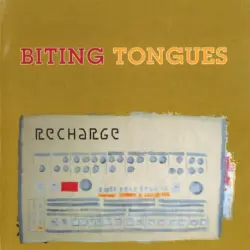
Graham Massey, Howard Walmsley, and Tom Barnish continued as Biting Tongues, with Massey steering the band towards a more electronic and MIDI-focused sound after completing a recording course. Live performances incorporated brass players and percussionists, exploring diverse sonic territories. In the studio, the increasing possibilities of sampling and software led to a significant shift in emphasis. Concurrently, Massey formed 808 State. In late 1988, work began on both the Biting Tongues album Recharge and 808 State's Quadrastate. While 808 State achieved chart success, the Biting Tongues project faced difficulties. The new label, Cut Deep, released the single "Love Out" in early 1989, but folded before Recharge could be officially released. Test pressings of Recharge have since become highly sought after by fans, particularly due to its recording sessions overlapping with those of 808 State's Quadrastate.