
History
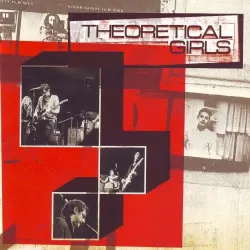
Theoretical Girls
Theoretical Girls was a seminal New York no wave band active from 1977 to early 1979. Despite a brief existence and limited official releases, the group played a significant role in the city's experimental music scene, launching the careers of notable figures in avant-garde composition and production.
Formation and Key Members
The band was co-founded by Glenn Branca and Jeff Lohn, both serving as songwriters. Glenn Branca, who would later become a renowned composer, played guitar in the quartet. Jeffrey Lohn, a classically trained composer, contributed vocals and guitar. The group also featured keyboardist Margaret DeWys and drummer Wharton Tiers, who would go on to become a prominent producer. Like many of their contemporaries in the no wave movement, Lohn and Branca were initially uninterested in conventional musical forms until inspired by the punk rock explosion.
Musical Style and Influence
Theoretical Girls emerged as one of the more enigmatic bands of the late 1970s New York no wave scene. Their sound has been compared to other contemporary Manhattan acts such as Contortions and DNA. Characterized by a confrontational, aggressive, and often darkly humorous approach, their music drew heavily from American minimalist composers. The band's output ranged from sparse, percussive pieces reminiscent of early Sonic Youth to intensely abrasive and experimental art-punk noise.
Discography and Legacy
During their short career, Theoretical Girls released only one single. However, their legacy has been preserved through later archival releases. In 1997, Atavistic Records released a collection featuring songs primarily written by Glenn Branca, including the single's B-side, "You Got Me." The A-side of that single, "U.S. Millie," written by Lohn, appears on a subsequent compilation released by Acute Records. This compilation, meticulously compiled by Daniel Selzer in collaboration with Jeffrey Lohn, unearthed recordings from rehearsal tapes and live performances. While at times challenging, these releases offer valuable insight into the unique blend of intellectual intensity and raw energy that defined the New York underground rock scene transitioning from the 1970s to the 1980s. The music of Theoretical Girls remains an essential document for understanding the roots of the no wave revival.