
History
Death in June
Death in June is a neofolk musical project spearheaded by the UK musician Douglas Pearce. While initially rooted in post-punk, the group is recognized as a foundational act in the development of the neofolk genre, alongside contemporaries Current 93 and Sol Invictus.
Formation and Early Years (1981-1985)
The project officially began in 1981, bringing together Douglas P. (vocals, multi-instrumentalist) and bassist Tony Wakeford. Drummer Patrick Leagas completed the original lineup. Their live debut occurred in late 1982, opening for The Birthday Party.
Following their debut, the 12-inch single "Heaven Street" was released. In 1983, Death in June issued their first full-length album, The Guilty Have No Pride. From its inception, the group faced criticism for its use of imagery that some perceived as fascist, leading to accusations of Nazism that have followed Pearce throughout his career. However, Pearce is openly gay and has collaborated with several Jewish musicians across his discography. The official Death in June website previously featured an Israeli flag, and the band performed in Israel on June 18, 2004, for a largely Jewish audience.
After the completion of the album Burial, Wakeford departed to form his own project, Sol Invictus. Following the release of 1985's Nada!, Pearce became the sole remaining original member, with Leagas also leaving to establish his own project, Sixth Comm.
Solo Evolution and Collaborations (1986-Present)
From 1986 onwards, with the double album The World That Summer, Death in June largely operated as a solo endeavor for Pearce. He was supported by a rotating cast of collaborators, including David Tibet of Current 93, Boyd Rice, and John Balance from Coil.
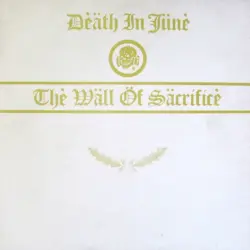
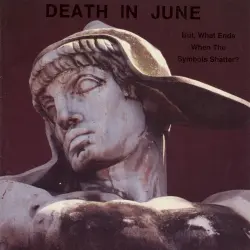
The group's sound evolved from the abrasive electronics and martial rhythms of their early work to a more expansive sonic palette on subsequent releases. Notable albums from this period include 1987's Brown Book, 1989's The Wall of Sacrifice, and 1992's But, What Ends When the Symbols Shatter?, the latter reflecting Pearce's long-standing interest in traditional European folk music.
Death in June became the first British musical act to perform in Croatia after the outbreak of the Yugoslav civil war, documenting their experiences on the 1993 album Something Is Coming. Further releases include 1995's Rose Clouds of Holocaust, 1998's Take Care and Control, 2000's Operation Hummingbird, and 2001's All Pigs Must Die.
Discography