
History
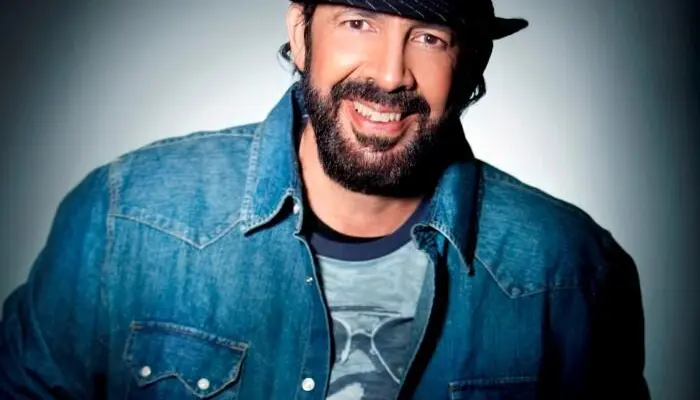
Juan Luis Guerra (born June 7, 1957) is a Dominican singer, songwriter, and producer whose innovative fusion of merengue, bachata, and Afro-Latin rhythms has made him one of the most influential figures in Latin music history. With a career spanning several decades, Guerra has earned numerous Grammy and Latin Grammy Awards, transforming traditional Caribbean sounds into a sophisticated, globally recognized pop style.
Early Life and Musical Foundation
Born in Santo Domingo, Dominican Republic, Guerra’s early interests were divided between literature and music. After studying philosophy and literature at the Universidad Autónoma de Santo Domingo, he transitioned to the Conservatorio Nacional de Música. His musical horizons expanded significantly in 1979 when he moved to Boston to attend the Berklee College of Music, where he studied composition and arranging. This formal training in jazz and classical theory would later become a hallmark of his complex musical arrangements.
The Formation of 440 and International Success
Upon returning to the Dominican Republic, Guerra formed the vocal group Juan Luis Guerra y 440 (Cuatro Cuarenta). The name "440" refers to the standard tuning pitch of A=440 Hz, symbolizing the group's commitment to technical precision. Their debut album, Soplando (1984), showcased a jazz-inflected vocal style, but it was their subsequent work that solidified their popularity across Latin America.
The 1989 release of Ojalá que llueva café catapulted the group to international stardom. The title track remains one of Guerra’s most celebrated compositions, blending poetic lyrics with driving merengue rhythms. This success was followed by the landmark album Bachata Rosa (1990), which sold over five million copies and earned Guerra his first Grammy Award. The album is credited with elevating bachata from a marginalized rural genre to a mainstream international phenomenon, featuring hits like "Burbujas de amor," "Bachata Rosa," and "Como abeja al panal."
Social Consciousness and Artistic Maturity
In the early 1990s, Guerra began incorporating more explicit social and political themes into his work. The 1992 album Areíto addressed the historical struggles of indigenous Caribbean peoples and contemporary economic hardships in Latin America. The single "El costo de la vida" became a major hit, though its critical look at globalization and poverty led to its video being restricted in some territories.
Following a brief hiatus, Guerra returned with Fogaraté (1994), which explored rural Dominican folk styles like perico ripiao and featured collaborations with African musicians. In 1998, he released Ni es lo mismo ni es igual, which won three Latin Grammys and featured the hit "El Niágara en bicicleta," a satirical critique of the healthcare systems in developing nations.
Spiritual Transition and Continued Influence
After a six-year break from recording, Guerra released Para Ti in 2004. This album reflected his conversion to Evangelical Christianity, featuring gospel-influenced tracks like "Las Avispas." The record was a commercial and critical success, winning multiple Billboard Music Awards in both the Gospel and Tropical categories.
Guerra’s influence extends beyond his own recordings through collaborations with artists such as Maná, Diego Torres, and Sting. He has performed at major international events, including the Rolling Stones' tour in Puerto Rico and Berklee's 60th-anniversary celebration. His 2007 album, La Llave de mi Corazón, further cemented his status as a master of the genre, dominating the Billboard charts and winning the Latin Grammy for Album of the Year.
Selected Discography
Soplando (1984)
Mudanza y Acarreo (1985)
Mientras más lo pienso... tú (1987)
Ojalá que llueva café (1989)
Bachata Rosa (1990)
Areíto (1992)
Fogaraté (1994)
Ni es lo mismo ni es igual (1998)
Para Ti (2004)
La Llave de mi Corazón (2007)