
History
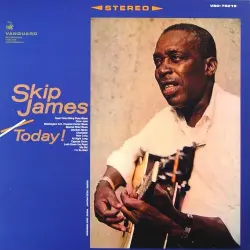
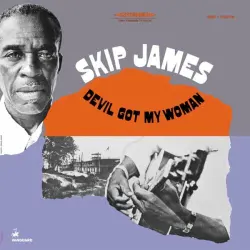
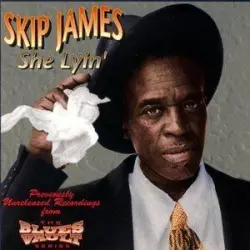
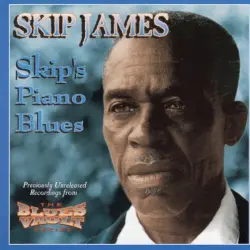
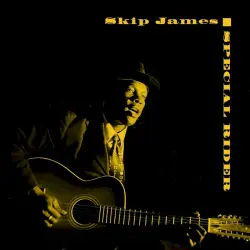
Nehemiah Curtis "Skip" James (June 9, 1902 – October 3, 1969) was a significant American Delta blues musician, recognized for his distinctive contributions as a singer, guitarist, pianist, and songwriter.
James's guitar playing was characterized by its dark, minor-key sound, often executed in an open D-minor tuning. His intricate fingerpicking technique set him apart. He made his initial recordings for Paramount Records in 1931. However, these recordings saw limited commercial success, largely due to their release during the economic hardships of the Great Depression, which led to James receding from the public eye.
Rediscovery and Later Career
Following an extended period away from public performance, Skip James was "rediscovered" in 1964 by enthusiasts of blues and folk music. This revival coincided with and contributed to the broader blues and folk music revival of the 1950s and early 1960s. During this resurgence, James performed at prominent folk and blues festivals, toured the country, and recorded several albums for various record labels. His influential songwriting and unique musical style have left a lasting impact on subsequent generations of musicians, with his songs being covered and adapted by numerous artists. He is widely regarded as one of the seminal figures in the history of the blues.
Artistic Persona and the "Bentonia School"
James was often described as an artist with an aloof and moody disposition. Musicologist Dick Spottswood noted the enigmatic nature of his personality, stating, "Skip James, you never knew. Skip could be sunshine, or thunder and lightning depending on his whim of the moment."
James is sometimes associated with the "Bentonia School," a term that refers either to a subgenre of blues music or a specific style of playing it. However, the existence and definition of this "school" remain subjects of discussion. In his 1994 biography, I'd Rather Be the Devil: Skip James and the Blues, Stephen Calt argued that no distinct blues style originated in Bentonia, Mississippi. Calt suggested that the "Bentonia School" concept was an oversimplification by later writers who underestimated the connectivity of small towns in early 20th-century Mississippi, which were linked by railways. He contended that musicians like Jack Owens, who were potentially contemporaries of James, primarily drew from James's musical repertoire rather than representing an independent tradition. The question of whether the work of these musicians constituted a distinct "school" and James's role within it—whether as originator or member—remains open to interpretation.