
History
Buju Banton: Jamaican Dancehall and Reggae Icon
Mark Myrie, known professionally as Buju Banton, was born in Salt Lane, a slum near Kingston, Jamaica, in 1973. The nickname "Buju" was given to him by his mother, referencing the breadfruit, an ironic moniker considering his slender frame and large head. "Banton," a Jamaican term for someone with an assertive attitude and eloquent speech, was also inspired by Buju's childhood admiration for the local artist Burro Banton, whose gravelly vocal style Buju emulated. His mother worked as a street vendor, while his father was a laborer. Buju is a descendant of the Maroons, an African Maroon community known for their resistance against British colonialists.
Early Career and Rise to Prominence
As a child, Buju Banton frequently observed his favorite artists performing at local venues. By the age of 13, he began his musical journey as a deejay under the name "Gargamel." His debut single, "The Ruler," was released in 1987, produced by Robert French at Penthouse Studios. In 1991, Banton joined Donovan Germain's Penthouse Label, forming a significant creative partnership with producer Dave Kelly. He rapidly became one of Jamaica's most popular musicians, achieving massive success in 1992 with hits like "Bogle" and "Love Me Browning/Love Black Woman." The latter sparked controversy due to its lyrics perceived as favoring lighter-skinned women, leading Banton to release "Black Woman" as a response, celebrating dark-skinned beauty. That same year, Buju broke Bob Marley's record for the most number-one singles in a single year in Jamaica, with tracks like "Man fi Dead" dominating the airwaves. His debut album, Mr. Mention, compiled these successful singles.
Controversy and Musical Evolution
The year 1992 also saw significant controversy surrounding Banton's homophobic song "Boom Bye Bye." British media highlighted the song's violent lyrics against homosexuals. Banton, who had signed with Mercury Records, maintained his stance, citing religious beliefs. While he downplayed the song's violent content as metaphorical, gay rights groups campaigned against him. In response to the ongoing criticism and to foster a more conscious image, Banton released the album Voice of Jamaica in 1993. This album featured socially aware tracks such as "Deportees," which addressed Jamaicans living abroad who did not support their families back home, a remix of "Tribal War" condemning political violence, and "Willy, Don't Be Silly," promoting condom use. Despite these efforts, the performance of "Boom Bye Bye" continued to draw criticism from gay rights advocates, while some in the dancehall community felt it hindered his potential international breakthrough.
Banton's 1995 album, Til Shiloh, marked a significant shift. Embracing the Rastafari faith, the album moved away from synthesized dancehall towards roots reggae, utilizing a live studio band. Til Shiloh is widely regarded as a landmark album, blending conscious lyrics with a powerful dancehall sound. The single "Murderer" from this album condemned violence within dancehall music, inspired by the deaths of fellow artists Panhead and Dirtsman, and prompted some clubs to stop playing excessively violent tracks. This album showcased a growing demand for socially conscious lyrics within dancehall and influenced the genre's spiritual dimension.
International Recognition and Later Works
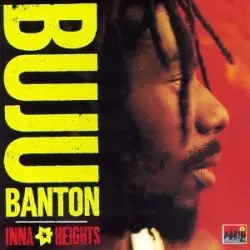
Inna Heights (1997) further expanded Banton's international reach. The album explored his vocal abilities with roots-influenced tracks and collaborations with artists like Beres Hammond and Toots Hibbert. Despite facing distribution challenges and some fan disappointment for not replicating the impact of Til Shiloh, the album was well-received for Banton's vocal experimentation.
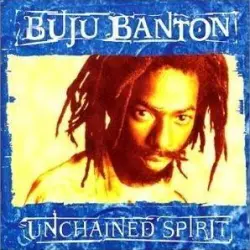
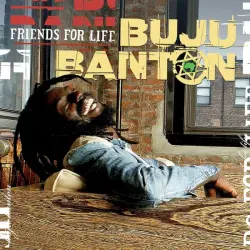
In 1998, Banton collaborated with the punk band Rancid, recording two songs, including "Life Won't Wait," which became the title track of Rancid's 1999 album. Banton subsequently signed with Anti, a subsidiary of Epitaph Records, and released Unchained Spirit in 2000. His 2003 album, Friends for Life, featured politically charged songs like "Mr. Nine," an anti-gun anthem that reinforced his reputation as a thoughtful artist.
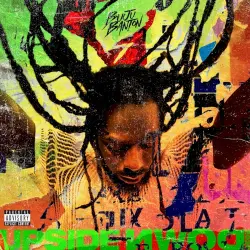
The 2006 album Too Bad earned Banton a Grammy nomination. The album, which he executive produced on his own Gargamel Music label, returned to the raw energy of his 1990s sound, characterized by his distinctive voice, hypnotic beats, and conscious lyrics. In 2009, he released Rasta Got Soul, his ninth album, which saw him return to roots and culture reggae and received another Grammy nomination for Best Reggae Album.
Legal Troubles and Release
In December 2009, Mark Myrie was arrested in Miami on charges related to conspiracy to possess and distribute cocaine. Prosecutors alleged he was a key figure in a drug operation, while his defense argued he was a victim of entrapment. After a mistrial in his first trial in 2010, Banton was convicted in February 2011 of conspiracy to possess with intent to distribute cocaine and related charges. In June 2011, he was sentenced to 10 years and one month in federal prison. Mark Myrie was released from federal prison in January 2019 and subsequently deported to Jamaica.
Discography