
History
Robert Schumann: A Pioneer of Musical Romanticism
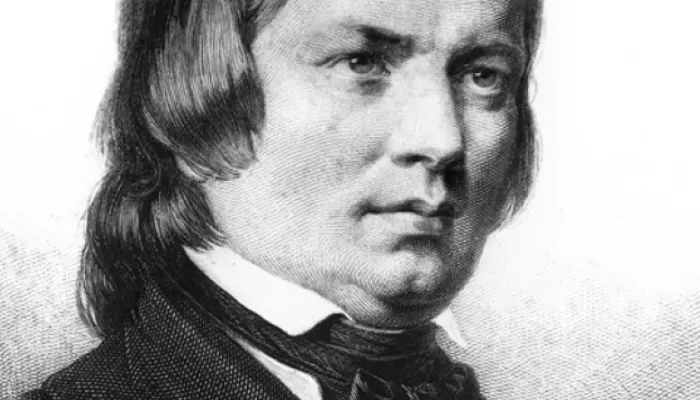
Robert Schumann (June 8, 1810 – July 29, 1856) was a pivotal German composer, pianist, and influential music critic of the early Romantic era. His extensive body of work spans solo piano pieces, songs with piano accompaniment (Lieder), chamber ensembles, orchestral compositions, choral works, and opera. Schumann's music is widely regarded as embodying the spirit of German Romanticism.
Early Life and Musical Beginnings
Born in Zwickau, Saxony, Schumann hailed from a middle-class family without a strong musical tradition. He initially explored both law and music, studying law at the universities of Leipzig and Heidelberg. However, his true passions lay in music and Romantic literature. Under the tutelage of Friedrich Wieck from 1829, Schumann's aspirations of becoming a concert pianist were tragically cut short by a hand injury. This setback redirected his focus entirely towards composition.
The Flourishing of Piano Works and Critical Voice
Schumann's early compositional output was dominated by piano music. Between 1834 and 1838, he produced seminal works such as "Carnaval," "Davidsbündlertänze," "Fantasiestücke," "Kreisleriana," and "Kinderszenen." In 1834, he co-founded and edited the "Neue Zeitschrift für Musik" for a decade, using his writings to express his artistic ideals. He often explored contrasting facets of his personality in his work, personifying them as "Florestan" and "Eusebius."
Marriage, Lieder, and Orchestral Pursuits
In 1840, Schumann married Clara Wieck, the accomplished pianist and composer and daughter of his former teacher, overcoming significant opposition. This year marked a prolific period for Schumann, particularly in the realm of Lieder, with notable compositions like "Frauenliebe und Leben" and "Dichterliebe." The following year, he turned his attention to orchestral music, completing the first of his four symphonies. His chamber music output also flourished in 1842 with the creation of three string quartets, a piano quintet, and a piano quartet. Despite recurring health issues throughout the 1840s, Schumann continued to compose and perform across Europe with Clara. His sole opera, "Genoveva" (1850), met with a lukewarm reception and is rarely staged today.
Later Years and Enduring Legacy
Schumann assumed the role of music director in Düsseldorf in 1850. However, the position proved challenging due to his introverted nature and deteriorating mental health, leading to his resignation after three years. In 1853, he and Clara befriended the young composer Johannes Brahms, whom Schumann championed in the "Neue Zeitschrift für Musik." Schumann's mental health declined sharply in 1854, culminating in a suicide attempt. He spent his final years in a sanatorium near Bonn, passing away in 1856.
During his lifetime, Schumann was primarily recognized for his innovative piano music and Lieder, celebrated for their poetic depth and programmatic qualities. While some of his later works were less appreciated at the time, contemporary scholarship now recognizes the full breadth of his genius. Schumann's music profoundly influenced subsequent generations of composers, including Gustav Mahler, Richard Strauss, Arnold Schoenberg, Georges Bizet, Claude Debussy, Pyotr Ilyich Tchaikovsky, and many others, solidifying his position as a cornerstone of 19th- and 20th-century classical music.
Discography