
History
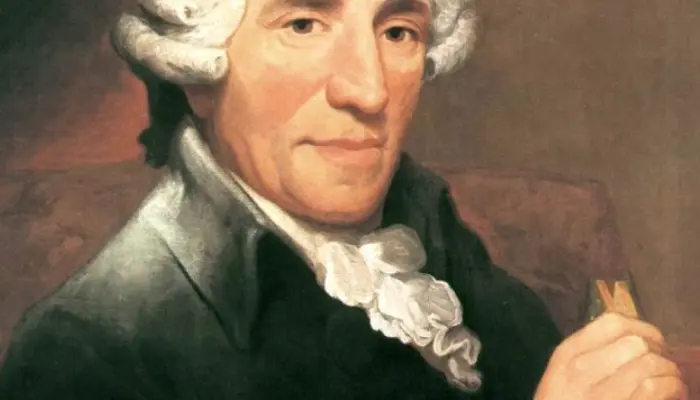
Joseph Haydn: Architect of the Classical Era
Joseph Haydn (1732–1809) stands as a monumental figure in classical music, widely celebrated as the "Father of the Symphony" and the "Father of the String Quartet." His prolific output and innovative approach profoundly shaped the musical landscape of his time.
Early Life and Musical Beginnings
Born on March 31 or April 12, 1732, in Rohrau, Austria, Haydn's upbringing was steeped in music. His father, Matthias Haydn, a wheelwright and village official, was an enthusiastic amateur harpist, and the family home was filled with song. Though his parents were illiterate and could not read music, they recognized their son's burgeoning talent. At the age of six, Haydn was sent to Hainburg to study with his relative Johann Matthias Franck, a schoolmaster and choirmaster. This marked the beginning of his formal musical training, though his early years were marked by hardship and meager sustenance.
Vienna and the St. Stephen's Cathedral Years
Haydn's exceptional singing voice brought him to the attention of Georg von Reutter, director of music at St. Stephen's Cathedral in Vienna, in 1740. He moved to Vienna to serve as a chorister for nine years, a period during which his younger brother Michael also joined the choir. Despite Reutter's neglect in providing adequate food and musical education, Haydn absorbed a wealth of musical knowledge by osmosis, as St. Stephen's was a vibrant center of musical activity. In 1749, upon losing his boyish voice, Haydn was dismissed. He spent a period as a freelance musician, taking on various roles, including valet and accompanist to the composer Nicola Porpora, from whom he learned crucial compositional fundamentals. This formative decade saw him compose his first string quartets and operas, gradually building his professional reputation.
The Esterházy Patronage
Haydn's career took a significant turn in 1759 when he became Kapellmeister for Count Karl von Morzin, for whom he composed his first symphonies. Financial difficulties led Count Morzin to disband his orchestra, but Haydn was quickly engaged by the wealthy Esterházy family in 1761, first as assistant Kapellmeister and then as full Kapellmeister upon the death of Gregor Werner in 1766. For nearly thirty years, Haydn served the Esterházys, composing, conducting their orchestra, performing chamber music, and staging operas. Despite the demanding workload, he valued the artistic freedom and resources provided by his patrons, particularly Prince Nikolaus I, who fostered his development. During this period, Haydn married Maria Anna Keller, though the marriage was childless and unhappy. He also maintained a long-term affair with the singer Luigia Polzelli, with whom he may have had children.
International Recognition and Friendships
Haydn's compositions during his Esterházy tenure became increasingly sophisticated, and his fame spread beyond the Esterházy estates. He began composing for publication, leading to significant commissions from abroad, including the "Paris" symphonies (1785–86). Around 1781, he formed a close friendship with Wolfgang Amadeus Mozart, whose work Haydn had already influenced. Their mutual admiration was profound, with Mozart dedicating his influential string quartets, inspired by Haydn's Opus 33, to him. Both composers were members of the same Catholic Masonic lodge.
The London Journeys
Following the death of Prince Nikolaus in 1790, Haydn was placed on pension by the new, unmusical prince. This liberation allowed him to accept a lucrative offer from impresario Johann Peter Salomon to visit England. His two visits (1791–92 and 1794–95) were triumphs, bringing him immense wealth and fame. These periods resulted in some of his most celebrated works, including the "Surprise," "Military," "Drumroll," and "London" symphonies, as well as the "Rider" quartet and the "Gypsy Rondo" piano trio.
Final Years and Legacy
Though he considered settling in England, Haydn returned to Vienna, built a grand house, and dedicated his final years to composing large-scale religious works, including the oratorios *The Creation* and *The Seasons*, and six masses. He also wrote his final string quartets. Despite declining health, which eventually prevented him from composing, Haydn found solace in his own patriotic melody, "Gott erhalte Franz den Kaiser," which later became the basis for the Austrian and German national anthems. Haydn died on May 31, 1809, during the French occupation of Vienna, his final moments marked by a concern for his servants amidst the sounds of war.
Haydn's legacy is immense. While the symphony was already established, his contributions elevated it to new heights, with his works forming the bedrock of the classical repertoire. His role in shaping the string quartet is undisputed, having essentially invented the form. Beyond these, his piano sonatas, trios, and masses laid the foundation for the classical style in these genres. Haydn's formal inventiveness, his development of sonata form, and his integration of techniques like the fugue into the classical idiom solidified his position as a central, transformative figure in Western music.
Discography