
History
Aaron Copland: A Defining Voice in American Music
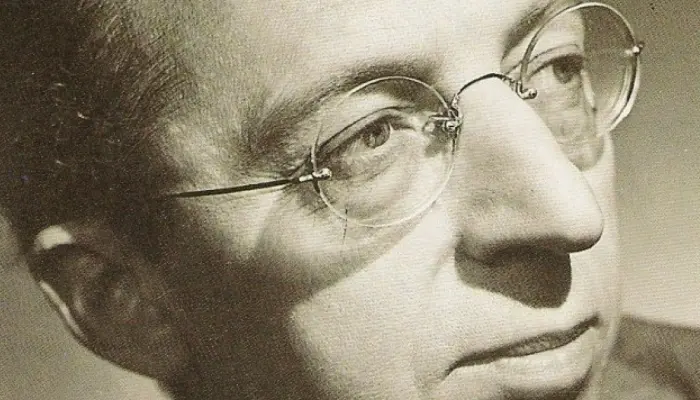
Aaron Copland (November 14, 1900 – December 2, 1990) was an American composer who forged a distinctive musical identity rooted in American themes and expressed through a modern, accessible style. Born in Brooklyn, New York, to Russian-Jewish immigrant parents, Copland's early musical education began with piano lessons from his sister. By age 15, he had committed to a career in composition, initially pursuing harmony through a correspondence course.
Early Influences and Parisian Sojourn
In 1921, Copland attended the newly established American Conservatory at Fontainebleau, where he encountered Nadia Boulanger, a pivotal teacher who profoundly influenced a generation of American musicians. He remained in Paris for three years, becoming Boulanger's first American composition student. Upon returning to New York, he received a commission from Boulanger to compose an organ concerto for her American performances. While working as a pianist in a hotel trio, Copland completed the Symphony for Organ and Orchestra, which premiered at Carnegie Hall with Walter Damrosch conducting.
Evolving Musical Language
Copland's compositional journey mirrored the significant artistic trends of his era. Following his return from Paris, he incorporated jazz rhythms into works like Music for the Theater (1925) and his Piano Concerto (1926). He then entered a phase heavily influenced by Igor Stravinsky's Neoclassicism, developing a more austere style characterized by "spare sonority" and "lean texture," evident in works such as Piano Variations (1930), Short Symphony (1933), and Statements for Orchestra (1933–35).
After Statements, Copland experienced a significant shift in his artistic direction, leading to his most prolific period. He articulated a growing desire to bridge the gap between contemporary composers and the public, recognizing the potential of new media like radio, phonograph, and film to reach a wider audience. This led him to simplify his musical language, aiming to create music with broader appeal. This pursuit of accessibility became a hallmark of his work from the 1930s onward.
National Identity and Global Recognition
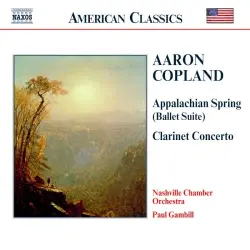
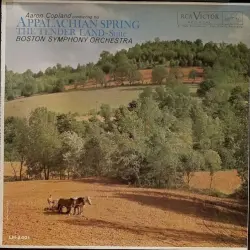
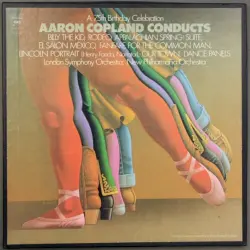
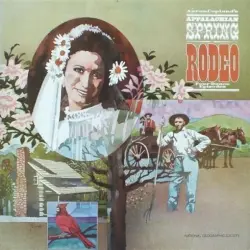
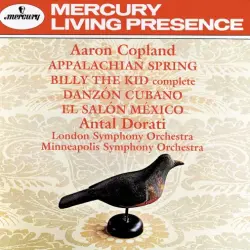
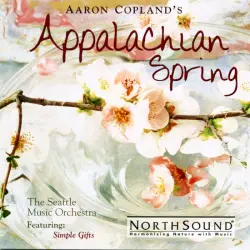
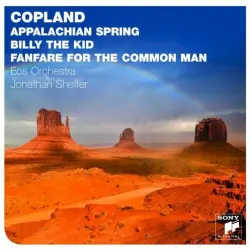
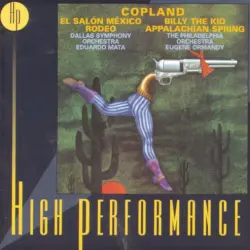
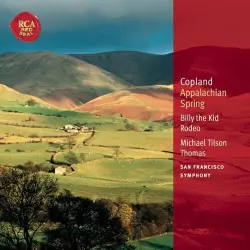
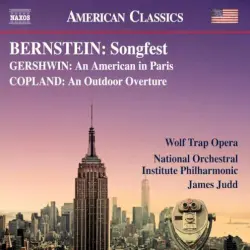
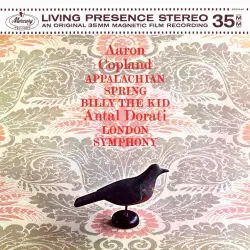
The subsequent decade saw the creation of works that established Copland's international reputation. His ballets, drawing on American folk material, are particularly celebrated: Billy the Kid (1938), Rodeo (1942), and Appalachian Spring (1944), the latter commissioned by choreographer Martha Graham. Other significant works from this period include El salón México (1936), inspired by Mexican melodies, and pieces for younger audiences like the "play opera" The Second Hurricane (1937) and An Outdoor Overture (1938). His film scores, including those for Of Mice and Men (1939), Our Town (1940), The Red Pony (1948), and The Heiress (1948), also gained widespread recognition.
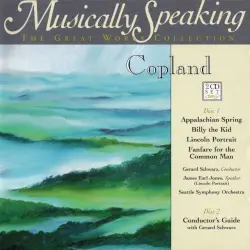
Copland's patriotic works, composed during wartime, resonate deeply. Lincoln Portrait (1942), featuring a speaker and chorus set to words from Abraham Lincoln's speeches, and Letter from Home (1944) are notable examples, as is his melodious Third Symphony (1946).
Later Years and Legacy
In his later compositions, Copland continued to explore American themes with a more mature perspective, stating, "we can be certain that when our music is mature it will also be American in quality." His later works include the opera The Tender Land (1954), Twelve Poems of Emily Dickinson (1950) for voice and piano, and the Nonet (1960). During this period, he also began to engage with the serial techniques of Arnold Schoenberg, evident in the dissonant Piano Fantasy (1957), Connotations (1962) commissioned for the opening of Lincoln Center, and Inscape (1967).
While his 12-tone works were not universally embraced, Copland remained active in music until the mid-1980s, lecturing and conducting even after largely ceasing to compose after 1970. For over four decades, Copland served as a composer, teacher, author, organizer, and conductor, embodying "the deepest reactions of the American consciousness to the American scene." He received numerous honors, including over 30 honorary degrees. His influential writings include What to Listen for in Music (1939), Music and Imagination (1952), Copland on Music (1960), and The New Music, 1900–60 (1968). In collaboration with Vivian Perlis, he authored his autobiography in two volumes: Copland: 1900 Through 1942 (1984) and Copland: Since 1943 (1989).
Discography