
History
Arvo Pärt: A Pioneer of Tintinnabuli
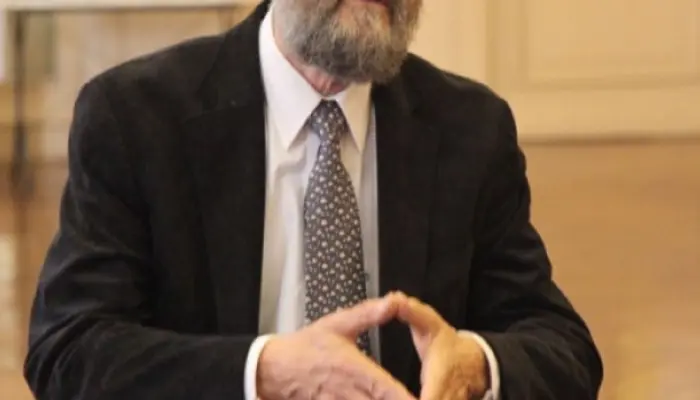
Arvo Pärt, born September 11, 1935, is an Estonian composer renowned for his contributions to classical and sacred music. Since the late 1970s, his work has been characterized by a minimalist style featuring his unique compositional technique, tintinnabuli. This approach draws inspiration from Gregorian chant and has established Pärt as the world's most performed living composer for five consecutive years.
Early Life and Musical Development
Born in Paide, Estonia, Pärt's musical journey began in 1954 at the Tallinn Music Secondary School. His studies were briefly interrupted by mandatory military service, during which he played the oboe and side drum in an army band. He resumed his education at the Tallinn Conservatory in 1957, studying composition under Professor Heino Eller. Pärt also worked as a recording engineer for Estonian Radio and composed extensively for stage and film, establishing himself as a professional composer before his graduation in 1963. His early recognition came with a first prize at the All-Union Young Composers' Competition for his children's cantata "Our Garden" and the oratorio "Stride of the World."
Evolution of Style: From Neoclassicism to Tintinnabuli
Pärt's compositional output is broadly divided into two distinct periods. His early works explored severe neoclassical styles influenced by composers like Shostakovich, Prokofiev, and Bartók. He later experimented with Schoenberg's twelve-tone technique and serialism, a path that met with disapproval from the Soviet establishment and proved creatively challenging. Facing censorship of his early works, Pärt entered periods of contemplative silence, during which he delved into the study of 14th to 16th-century choral music.
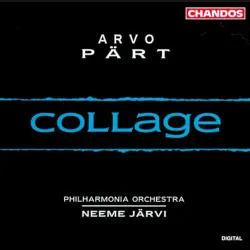
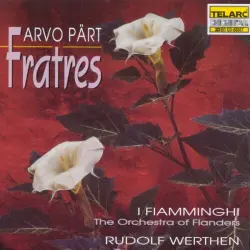
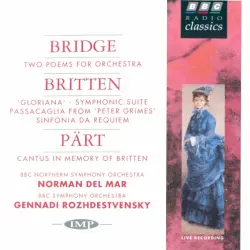
The influence of early European polyphony is evident in his transitional Third Symphony (1971). Following this, Pärt immersed himself in early music, re-examining the foundations of Western music, including plainsong, Gregorian chant, and the development of Renaissance polyphony. This profound exploration led to a radical shift in his compositional voice, marked by seminal works such as "Fratres," "Cantus in memoriam Benjamin Britten," and "Tabula Rasa," composed in the 1970s.
The Tintinnabuli Technique
Pärt describes his signature style as tintinnabuli, evoking the sound of ringing bells. This technique is defined by simple harmonies, often featuring single, unadorned notes or triad chords that form the basis of Western harmony. The rhythmic structure of tintinnabuli works is typically straightforward, with a consistent tempo, further reflecting the clarity of bell-like tones. The influence of early music remains a clear characteristic of these compositions.
Sacred Music and Later Works
A significant aspect of Pärt's later output, particularly following his emigration from the Soviet Union to Germany in the 1980s, is his focus on choral works and settings of sacred texts. While he often chooses Latin or Church Slavonic for these pieces, he has also utilized his native Estonian. Notable large-scale works inspired by religious texts include "St John Passion," "Te Deum," and "Litany." Choral pieces from this period also include "Magnificat" and "The Beatitudes."
In 2006, Pärt composed "Für Lennart" in memory of Estonian President Lennart Meri, which was performed at his funeral. In response to the murder of Russian journalist Anna Politkovskaya in 2006, Pärt dedicated his performances in the 2006-2007 season to her memory.
Honors and Commissions
Arvo Pärt was the featured composer at the 2008 RTÉ Living Music Festival in Dublin, Ireland. He was also commissioned by the Louth Contemporary Music Society to compose a new choral work based on "St Patrick's Breastplate," which premiered in Louth, Ireland, in 2008.
Discography