
History
Carl Orff: Composer and Music Educator
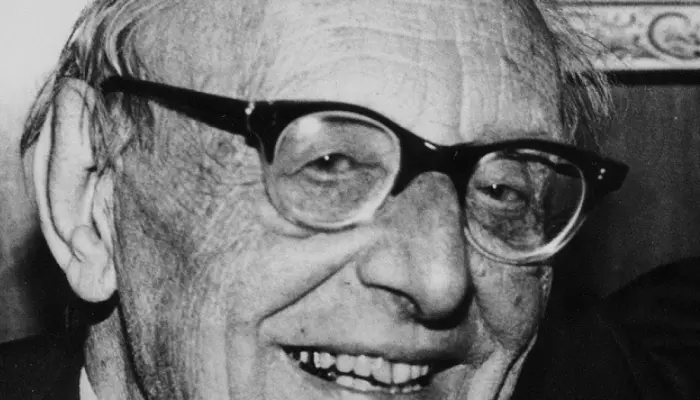
Carl Orff (July 10, 1895 – March 29, 1982) was a German composer and influential music educator, best known for his 1937 scenic cantata, Carmina Burana.
Early Life and Education
Born in Munich, Orff hailed from a Bavarian family with strong ties to the German military. His father's regimental band reportedly often performed the young Orff's compositions. He studied at the Munich Academy of Music until 1914, subsequently serving in the military during World War I. Following the war, he held various positions at opera houses in Mannheim and Darmstadt before returning to Munich to continue his musical studies.
Development of Educational Theories
In 1925, Orff became the head of a department and co-founder of the Guenther School for gymnastics, music, and dance in Munich. Working with young musical beginners in this setting, he developed his influential theories on music education. His approach emphasized rhythmic movement and elemental musical expression.
Carmina Burana and Nazi Germany
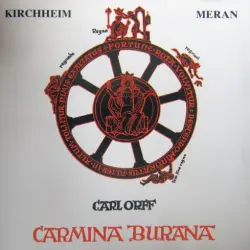
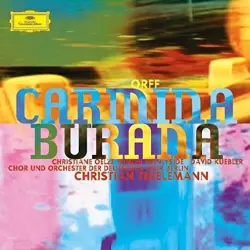
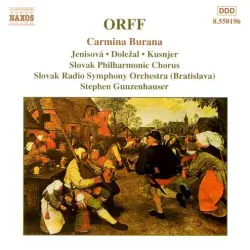
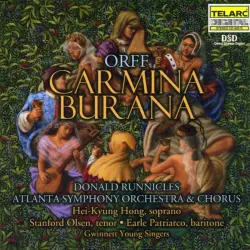
Orff's Carmina Burana, premiered in Frankfurt in 1937, achieved significant popularity in Nazi Germany, despite one critic labeling it "degenerate." While Orff's precise relationship with the Nazi party remains unclear, he was among the few German composers who responded to the official call to compose new music for Shakespeare's A Midsummer Night's Dream after Felix Mendelssohn's score was banned. This action suggests a degree of compliance or alignment with the regime's cultural agenda.
Post-War Claims and Artistic Output
After World War II, Orff claimed membership in the White Rose resistance movement and involvement in resistance activities. However, this assertion lacks corroborating evidence beyond his own word, and some sources dispute his claims. He was a personal friend of Kurt Huber, a founder of the White Rose, who was executed by the Nazis in 1943.
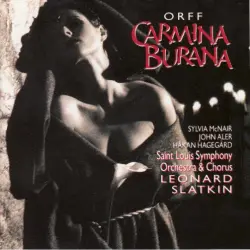
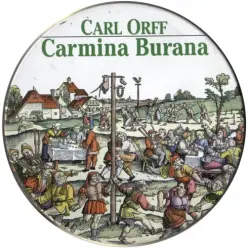
Carmina Burana is the first part of Orff's trilogy, Trionfi, which also includes Catulli Carmina and Trionfo di Afrodite. These works, drawing inspiration from medieval German poetry and thirteenth-century Goliardic verses found in the Codex latinus monacensis, showcase his interest in medieval themes, characterized by infectious rhythms and accessible tonalities. The trilogy, meaning "triumphs," was a departure from his earlier compositions, with Orff revising or discarding much of his previous work following the success of Carmina Burana.
Orff preferred not to categorize his works strictly as operas. He described Der Mond ("The Moon," 1939) and Die Kluge ("The Wise Woman," 1943) as "Märchenoper" (Fairytale Opera). Regarding Antigone (1949), based on Sophocles' tragedy with a German translation by Friedrich Hölderlin, Orff specified it as a "Vertonung" (musical setting), notable for its extensive use of percussion and relatively simple orchestration.
His final work, De Temporum Fine Comoedia ("A Play of the End of Time"), premiered at the Salzburg Festival on August 20, 1973, conducted by Herbert von Karajan. This deeply personal mystery play, sung in Greek, German, and Latin, presented Orff's reflections on the end of time.
Carl Orff is buried in the Baroque church of the Andechs Abbey, south of Munich.
Discography