
History
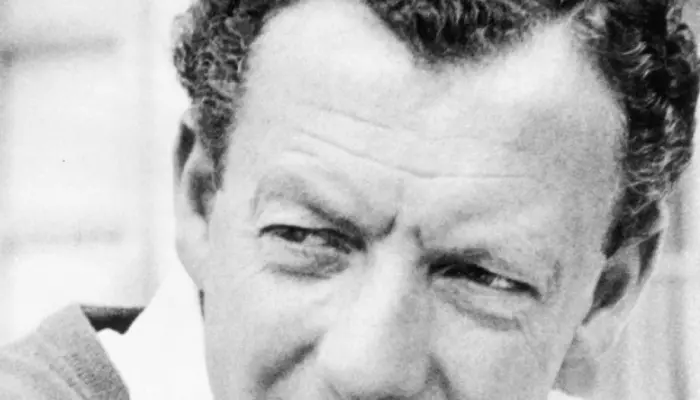
Benjamin Britten: A Life in Music
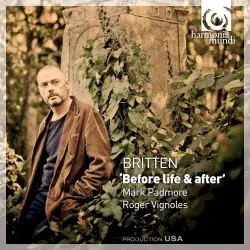
Edward Benjamin Britten, Baron Britten of Aldeburgh (1913–1976) was a preeminent British composer, conductor, and pianist whose prolific output and innovative spirit left an indelible mark on 20th-century classical music. Born in Lowestoft, Suffolk, Britten displayed prodigious musical talent from a young age, beginning composition as a child and later studying with Frank Bridge. His early education also included studies at the Royal College of Music under John Ireland, with some guidance from Ralph Vaughan Williams. Though his parents, influenced by college staff, initially limited his studies, Britten had also aspired to learn from Alban Berg in Vienna.
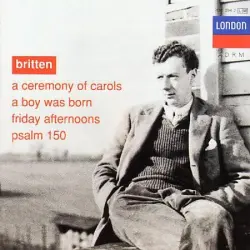
His first compositions to gain significant recognition were the Sinfonietta (op.1) and the choral variations A Boy was Born, both completed in 1934. The following year marked a pivotal moment when Britten met the poet W. H. Auden, initiating a fruitful collaboration that produced works like the politically and musically adventurous song-cycle Our Hunting Fathers. Even more consequential was his meeting in 1936 with tenor Peter Pears, who would become Britten's lifelong partner and principal musical interpreter. In 1939, Britten and Pears followed Auden to America, where Britten composed his first opera, Paul Bunyan (with a libretto by Auden), and the first of many song-cycles for Pears. This period also yielded significant orchestral works, including Variations on a Theme of Frank Bridge and Sinfonia da Requiem.
Return to England and Operatic Triumphs
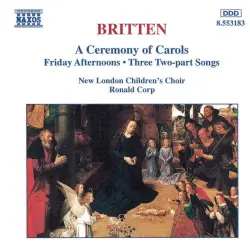
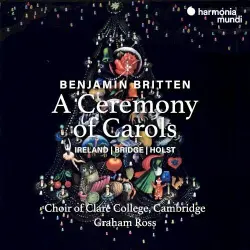
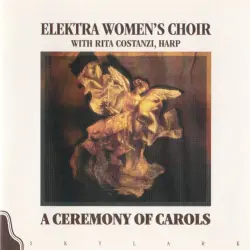
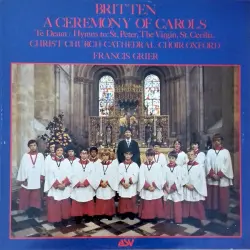
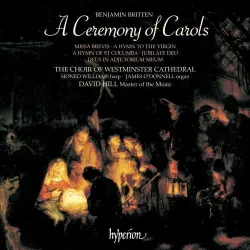
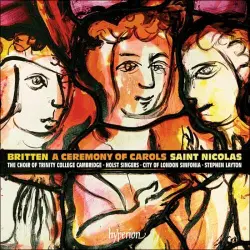
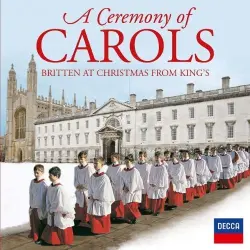
Britten and Pears returned to England in 1942, with Britten completing the choral works Hymn to Saint Cecilia (his final collaboration with Auden) and A Ceremony of Carols during their sea voyage. He had already begun work on his opera Peter Grimes, which premiered at Sadler's Wells in 1945 to considerable acclaim, marking his most significant success to date. Despite this triumph, Britten faced opposition from certain segments of the English musical establishment. In response, he gradually withdrew from the London scene, establishing the English Opera Group in 1947 and the Aldeburgh Festival the following year, partly to provide a platform for his own compositions.
Peter Grimes heralded a series of celebrated English operas, including Billy Budd (1951) and The Turn of the Screw (1954). These works frequently explore the theme of the 'outsider,' portraying characters excluded or misunderstood by society, often as the central figure, such as in the eponymous operas Peter Grimes and Owen Wingrave.
Eastern Influences and Late Works
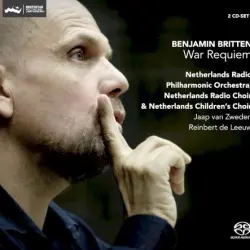
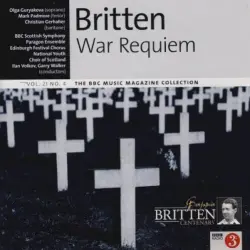
An increasingly important influence on Britten's music was the music of the East, sparked by a tour with Pears in 1957. He was particularly captivated by Balinese gamelan music and Japanese Noh theatre. This inspiration led to the ballet The Prince of the Pagodas (1957) and a series of semi-operatic "Parables for Church Performance": Curlew River (1964), The Burning Fiery Furnace (1966), and The Prodigal Son (1968). However, the greatest commercial success of Britten's career was the more conventionally structured War Requiem, composed in 1962 for the reopening of Coventry Cathedral.
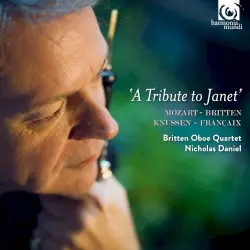
In the final decade of his life, Britten's health declined, and his late works became characterized by increasingly sparse textures. Notable among these are the opera Death in Venice (1973), the Suite on English Folk Tunes A Time There Was, and the Third String Quartet (1975), which drew material from Death in Venice. His final completed work was the dramatic cantata Phaedra (1976), written for Janet Baker. Benjamin Britten died of heart failure on December 4, 1976, at his home in Aldeburgh, shortly after being elevated to the peerage.
Key Works and Musical Style
Among Britten's most widely recognized compositions is The Young Person's Guide to the Orchestra (1946), subtitled Variations and Fugue on a Theme of Purcell. Commissioned for an educational film, it masterfully showcases the instruments of the orchestra by presenting variations on a theme by Henry Purcell, culminating in a complex fugue. While originally accompanied by narration for the film, concert performances and recordings often omit this spoken commentary.
Britten was also a skilled pianist, occasionally performing chamber music and accompanying lieder. Beyond his 1938 Piano Concerto and the 1940 Diversions for piano and orchestra, he wrote sparingly for the instrument, viewing it in a 1963 interview as primarily a "background instrument."
A significant solo work for guitar, Nocturnal after John Dowland (1964), holds a central place in the instrument's repertoire. Reflecting his late style, this piece is a profound meditation on John Dowland's song "Come, Heavy Sleep," presenting the theme after eight variations that explore its melodic and harmonic intricacies, demonstrating Britten's lifelong admiration for Elizabethan lute songs.
Legacy and Reception
Benjamin Britten's standing as one of the foremost English composers of the 20th century is firmly established among critics. In the 1930s, he deliberately sought to differentiate himself from what he perceived as a complacent and insular English musical tradition. Consequently, many contemporary critics viewed his technical prowess, cosmopolitan influences, and admiration for composers like Mahler, Berg, and Stravinsky with suspicion. Even today, discussions of his music can become intertwined with his personal life, politics, and sexuality. While the publication of Humphrey Carpenter's biography in 1992 brought to light aspects of Britten's complex relationships, many musicians continue to celebrate his flawless technique, broad human empathy, and ability to infuse traditional musical forms with remarkable freshness and originality, securing his place among the leading composers of his generation.
Discography