
History
Johannes Brahms: A Master of Mid-Romantic Music
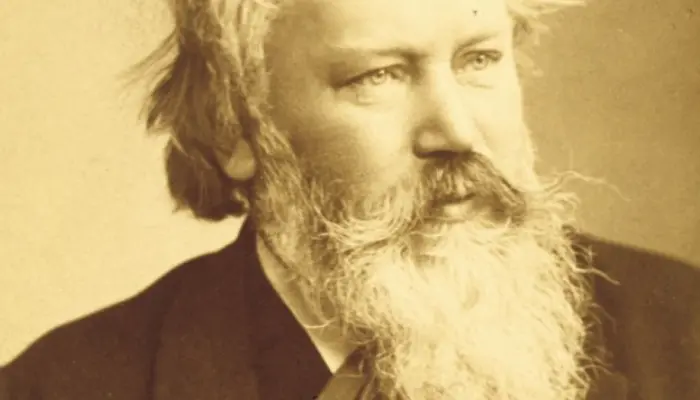
Johannes Brahms (1833–1897) was a German composer, pianist, and conductor whose work defined much of the mid-Romantic period. His compositions are celebrated for their rhythmic dynamism and innovative use of dissonance, often interwoven with intricate yet profoundly expressive contrapuntal textures. Brahms masterfully adapted traditional musical forms and techniques, drawing inspiration from a wide array of earlier composers.
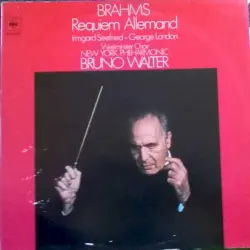
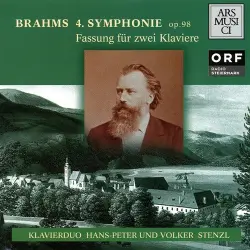
His extensive catalog includes four symphonies, four concertos, a Requiem, a significant body of chamber music, numerous arrangements of folk songs, and Lieder, alongside works for symphony orchestra, piano, organ, and choir.
Early Life and Influences
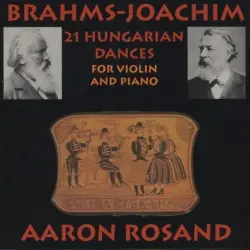
Born into a musical family in Hamburg, Brahms displayed his compositional and performing talents from a young age. As an adult, he embarked on tours across Central Europe as a pianist, premiering many of his own compositions and meeting prominent figures like Franz Liszt in Weimar. His collaborations with musicians such as Ede Reményi and Joseph Joachim were crucial, particularly in seeking the endorsement of Robert Schumann, who, along with his wife Clara Schumann, provided Brahms with significant support and mentorship.
Following Robert Schumann's mental health crisis and subsequent institutionalization, Brahms resided with Clara in Düsseldorf. A deep and enduring friendship developed between them, continuing after Robert's death. Brahms never married, a decision possibly made to dedicate himself fully to his musical career and scholarly pursuits. He was known for his introspective nature and a sometimes intense self-criticism.
Artistic Legacy and Recognition
While Brahms's music was considered innovative, it was also viewed as relatively conservative within the context of the "War of the Romantics," a public debate in which Brahms later expressed regret for his involvement. Nevertheless, his compositions achieved considerable acclaim, attracting a growing following among musicians and audiences alike. Critics like Eduard Hanslick lauded his works as exemplars of "absolute music," while Hans von Bülow famously positioned Brahms as a successor to Bach and Beethoven, a perspective notably challenged by Richard Wagner.
Brahms eventually settled in Vienna, where he directed the Singakademie and the Gesellschaft der Musikfreunde. In these roles, he curated programs featuring early and often serious musical works, reflecting his personal studies and profound musical knowledge. Towards the end of his life, despite contemplating retirement from composition, he continued to create chamber music, notably pieces for the clarinetist Richard Mühlfeld.
Brahms's music gained international prominence during his lifetime and continues to be a cornerstone of the classical repertoire. His compositional mastery and contributions were recognized and admired by contemporaries such as Antonín Dvořák, whom Brahms actively championed. Later composers, including Max Reger and Alexander Zemlinsky, found ways to integrate Brahms's stylistic elements with those of Wagner. Arnold Schoenberg, in particular, highlighted the progressive aspects of Brahms's music, and both Schoenberg and Anton Webern were profoundly influenced by the structural sophistication of his compositions, including Schoenberg's concept of "developing variation." Brahms's enduring influence extends into the 21st century, continuing to inspire composers worldwide.
Discography