
History
Sergei Prokofiev: A 20th-Century Musical Innovator
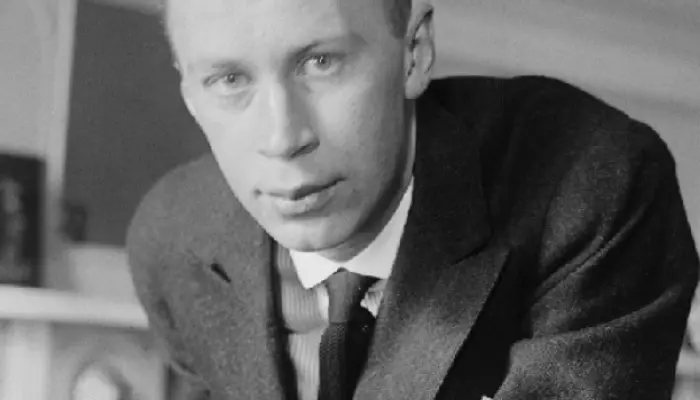
Sergei Sergeyevich Prokofiev (1891–1953) was a Russian composer, pianist, and conductor who became one of the most celebrated and influential figures of 20th-century classical music. His prolific output spanned numerous genres, earning him recognition as a master of modern composition.
Early Life and Musical Prodigy
Born in Sontsovka, a rural estate in the Russian Empire, Prokofiev displayed exceptional musical talent from a young age. By age five, he was composing his first pieces, including an "Indian Gallop." His early fascination with chess, a passion he maintained throughout his life, began around age seven. By nine, he had already penned his first opera, The Giant, alongside overtures and other compositions.
His formal musical education began in 1902 when his mother arranged for him to study composition with Reinhold Glière, who visited Prokofiev in Sontsovka. These lessons provided Prokofiev with the theoretical tools to further develop his unique musical style. Feeling stifled by the isolation of his rural upbringing, Prokofiev moved to Saint Petersburg in 1904 to attend the Saint Petersburg Conservatory. Encouraged by Alexander Glazunov, he began his composition studies, though he was often perceived as eccentric and arrogant due to his youth and outspokenness.
Developing a Distinctive Voice
At the Conservatory, Prokofiev studied under notable figures such as Anatol Liadov, Nikolai Tcherepnin, and Nikolai Rimsky-Korsakov. He also formed significant friendships with fellow composers Boris Asafiev and Nikolai Myaskovsky. Prokofiev quickly gained a reputation within the Saint Petersburg music scene as an enfant terrible, known for his original compositions and his commanding piano performances. He graduated from his composition class in 1909, though his marks were not outstanding. He continued his studies, focusing on piano and conducting, and his compositions from this period began to exhibit greater intensity and experimental qualities.
The death of his father in 1910 meant the cessation of financial support, but by this time, Prokofiev was establishing himself as a composer. His early piano concertos were composed around this period. A crucial turning point came in 1911 when musicologist Alexander Ossovsky championed Prokofiev to publisher P.I. Jurgenson, leading to a contract. In 1913, Prokofiev made his first international excursion, traveling to Paris and London, where he encountered Sergei Diaghilev's Ballets Russes.
War, Revolution, and Emigration
Prokofiev returned to the Conservatory during World War I, studying the organ. He composed the opera The Gambler, based on Dostoevsky's novel, but its premiere was canceled due to the February Revolution. In the summer of 1917, he composed his first symphony, the "Classical," a work deliberately written in a style he imagined Joseph Haydn might have employed, blending classical forms with modern musical elements.
Amidst the political unrest in Russia, Prokofiev decided to leave the country. With the support of Anatoly Lunacharsky, the People's Commissar for Education, who recognized Prokofiev's revolutionary musical spirit, he departed for the United States in May 1918, seeking an environment more conducive to his experimental music.
Discography