
History
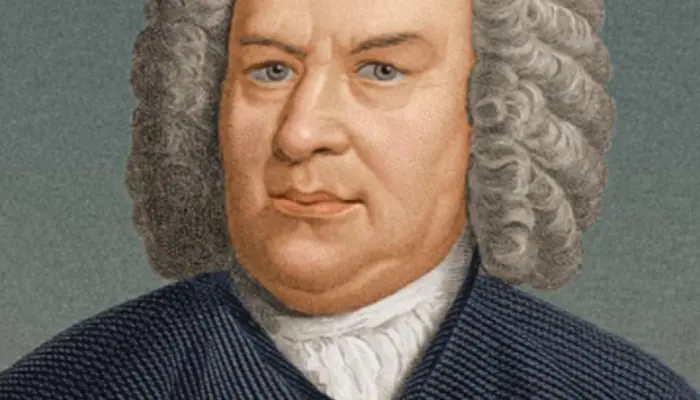
Johann Sebastian Bach (1685–1750) was a German composer and musician whose work represents the pinnacle of the Baroque era. He is widely regarded as one of the most influential figures in the history of Western classical music, celebrated for his mastery of counterpoint, harmonic organization, and the integration of diverse European musical traditions.
Early Life and Formative Years
Born in Eisenach into a prominent musical dynasty, Bach received his earliest instruction from his father, Johann Ambrosius Bach. After being orphaned at the age of ten, he moved to Ohrdruf to live with his eldest brother, Johann Christoph Bach, an organist who continued his musical education. Bach later secured a scholarship to the St. Michael’s School in Lüneburg, where he was exposed to a broad range of choral and instrumental music.
Professional Career and Appointments
Bach’s professional life began in 1703 with a series of positions across Thuringia. He served as an organist in Arnstadt and Mühlhausen before moving to the ducal court in Weimar in 1708. During his time in Weimar, he composed many of his great organ works and began exploring the Italian concerto style. In 1717, he was appointed Kapellmeister for Prince Leopold of Anhalt-Köthen. Because the court was Reformed (Calvinist), Bach focused less on sacred music and more on instrumental compositions, producing the Brandenburg Concertos, the Cello Suites, and the first book of The Well-Tempered Clavier.
The Leipzig Period
In 1723, Bach accepted the prestigious position of Thomaskantor in Leipzig, where he remained for the rest of his life. His duties included providing music for the city's major churches and overseeing the musical education of students at the St. Thomas School. This era was incredibly prolific, resulting in the creation of hundreds of cantatas, the St Matthew Passion, and the St John Passion. He also directed the Collegium Musicum, a secular ensemble that performed at Zimmermann's Coffeehouse, where he premiered many of his keyboard and orchestral concertos.
In his later years, Bach focused on complex contrapuntal projects, such as The Art of Fugue and the Musical Offering, while also completing the monumental Mass in B minor. He died in 1750 following complications from eye surgery. Bach was the father of 20 children across two marriages—first to Maria Barbara and later to Anna Magdalena—and four of his sons became significant composers who helped bridge the gap between the Baroque and Classical periods.
Musical Style and Innovation
Bach’s compositions are characterized by their intellectual depth and technical command. He successfully synthesized German polyphonic traditions with Italian melodic clarity and French rhythmic elegance. His work is defined by several key elements:
Legacy and Influence
While Bach was primarily known as a virtuoso organist during his lifetime, his reputation as a composer grew immensely in the 19th century. The "Bach Revival," catalyzed by Felix Mendelssohn’s 1829 performance of the St Matthew Passion, led to the systematic publication of his complete works. Today, Bach’s music is a cornerstone of the global repertoire, studied for its structural perfection and performed for its profound emotional resonance. His compositions are cataloged in the Bach-Werke-Verzeichnis (BWV), which remains the standard reference for his vast body of work.
Discography


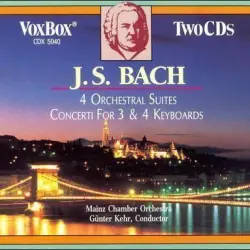
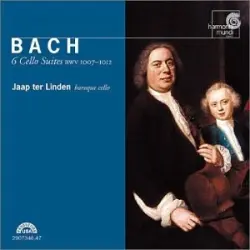
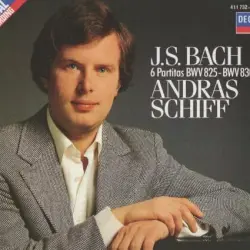

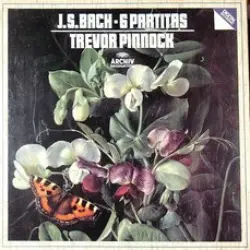

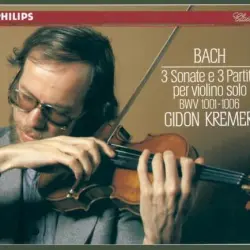


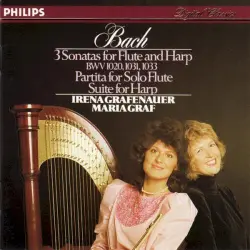
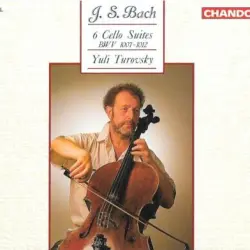
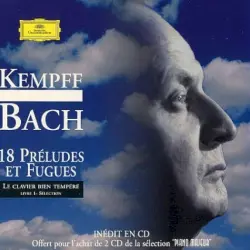
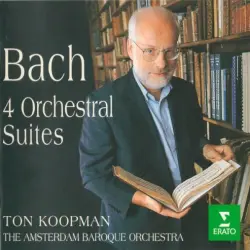
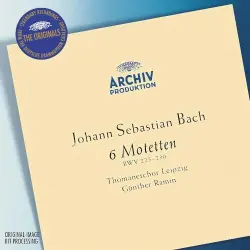

![3 Suites [BWV 995, 997, 1012]](https://albums.staticmusichearts.com/149/14981/1498194/m.webp?20260319051503 "3 Suites [BWV 995, 997, 1012]")

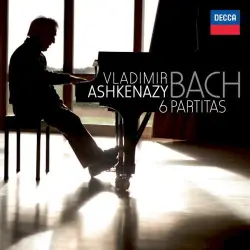
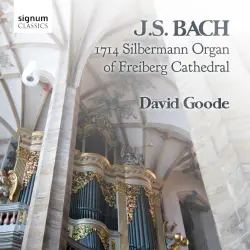
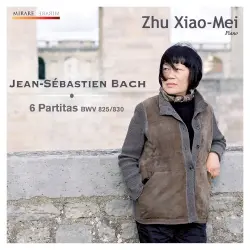
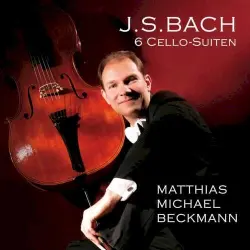
![3 Sonatas for Viola [da Gamba] and Harpsichord](https://albums.staticmusichearts.com/148/14889/1488995/m.webp?20260319053407 "3 Sonatas for Viola [da Gamba] and Harpsichord")