
History
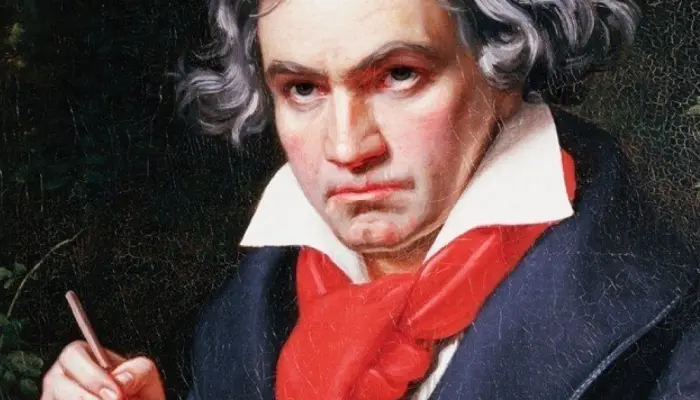
Ludwig van Beethoven (baptized December 17, 1770 – March 26, 1827) was a German composer and pianist whose work defines the transition between the Classical and Romantic eras in Western music. He remains one of the most influential and frequently performed composers in history, known for expanding the scope of the symphony, sonata, and string quartet.
Early Life and Musical Education
Born in Bonn, Beethoven showed significant musical talent at a young age. His first instructor was his father, Johann van Beethoven, followed by more formal training under Christian Gottlob Neefe. Under Neefe's tutelage, Beethoven published his first composition in 1783—a set of keyboard variations. In 1792, at the age of 21, he moved to Vienna to study with Joseph Haydn. He quickly gained a reputation as a formidable virtuoso pianist and secured the patronage of influential figures like Prince Lichnowsky, which facilitated the publication of his Opus 1 Piano Trios in 1795.
The Middle Period and the "Heroic" Style
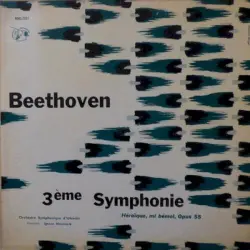
Beethoven’s career is typically divided into three periods. His early works, produced until roughly 1802, show him mastering the high Classical style of Haydn and Mozart. However, his middle period (1802–1812) saw the emergence of a more individual and "heroic" voice. This era produced landmark works including the Third Symphony (Eroica), the Fifth Symphony, and his only opera, Fidelio.
During this time, Beethoven began to suffer from progressive hearing loss, a condition that caused him immense personal and professional distress. He documented his struggle in the 1802 Heiligenstadt Testament, a letter to his brothers expressing his determination to continue composing despite his ailment. His Violin Concerto (1806) and Piano Concerto No. 5 (Emperor) (1811) also date from this prolific period.
Late Works and Legacy
By 1815, Beethoven was nearly completely deaf and had largely withdrawn from public performance. His late period, spanning from 1812 until his death in 1827, is characterized by intellectual depth, formal innovation, and intense personal expression. Works from this era, such as the Missa solemnis and his final piano sonatas, pushed the boundaries of musical structure.
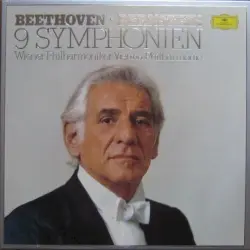
His Symphony No. 9, completed in 1824, was groundbreaking for its inclusion of vocal soloists and a full choir in the final movement. Beethoven’s late string quartets, including the complex Grosse Fuge, were considered radical at the time and continue to influence composers today. Beethoven died in Vienna on March 26, 1827, leaving behind a body of work that fundamentally altered the course of music history.
Discography